Storage in Hampstead for household, office and overflow items

Storage in Hampstead can help when rooms are crowded, a refurbishment is underway, or business items need to be held securely between moves. We provide practical storage support for furniture, boxes, archive material and other belongings that need a sensible temporary home. The service is built around careful handling, clear scheduling and straightforward access arrangements, so items can be placed into storage and brought back out in an orderly way when needed.
Our approach suits customers who want to keep possession of valued items without filling every spare corner at home or at work. It can also support staged decluttering, renovation plans and relocations that do not happen in a single day. Storage solutions are most useful when the process is kept simple: identify what needs to go into storage, decide how it should be packed, and arrange collection or delivery at a practical time. We focus on making that process manageable rather than adding unnecessary complexity.
If you are comparing options, start with the type of items you need to store and how often you may need to reach them. Then request a quotation based on the load size, handling needs and any special access considerations.
Household storage for furniture, boxes and personal belongings
Household storage often begins with a short list of what should stay accessible and what can be set aside for a while. Sofas, dining sets, wardrobes, seasonal items and well-packed cartons may all be suitable, provided the packing is tidy and the load is organised. Storage works best when items are grouped by room or purpose, because that makes retrieval easier and reduces the chance of damage during later handling.
For customers between homes, storage can bridge the gap when completion dates, decorating plans or tenancy changes do not align neatly. It can also be useful during downsizing, where furniture is kept temporarily while decisions are made about what to retain. We can assist with moving items into storage in a careful sequence, home moves style planning often helping when larger items need to be taken out of circulation and returned later without confusion.
Good household storage is less about simply finding a space and more about preserving order. Items should be cleaned if needed, wrapped appropriately and labelled clearly enough to recognise them later. For breakable possessions, strong cartons and protective materials matter more than speed. Where awkward furniture is involved, removal and reassembly decisions should be made in advance so that everything can be handled without avoidable strain or guesswork.
Business and office storage made orderly

Businesses often need temporary storage for desks, chairs, filing, archived paperwork, exhibition stock or surplus equipment. The aim is usually to free up workspace while keeping items retrievable in a sensible sequence. Office storage is most effective when equipment is listed, labelled and grouped before collection. That makes it easier to keep categories separate, whether the items are due back soon or will remain stored for a longer period.
Storage can also support changing office layouts, refurbishments and relocations. During a staged move, some items may need to be taken away before others are ready, and not everything will fit neatly into one transfer. In those situations, clear handling and coordinated timing matter. office relocation services are a practical companion to storage when an organisation needs to move in phases while maintaining enough order to resume work smoothly.
Commercial storage should be planned with access, records and packing quality in mind. Boxes containing documents need legible labels, while equipment should be protected from knocks and dust. If furniture is being stored for later use, it helps to keep fixings together and avoid placing heavy items on top of fragile ones. The better the preparation, the easier it is to return items to service without unnecessary sorting.
When storage is the right option

Storage is useful in several common situations, and choosing it early can prevent rushed decisions later. It can create breathing room during renovation, help with inherited items that require review, support travel or temporary work away from home, and allow a business to reduce clutter without discarding usable stock. The main question is whether the items need to be kept safe and available rather than disposed of or relocated permanently.
It is worth thinking about how soon each item may be needed again. Belongings required frequently should be easier to identify and reach, while long-term overflow can be packed more densely if it is properly protected. For mixed loads, the order of packing matters. Keep essential items apart from bulk storage, and avoid creating a pile that will be difficult to sort through when something must be recovered quickly.
Where a storage plan is tied to moving day, preparation becomes more straightforward if the load is reduced in advance. Unwanted pieces can be removed separately, and the rest can be organised for storage or onward transport. In some cases, furniture pick-up is a sensible way to manage bulky items that no longer need to be kept, leaving the storage arrangement focused on the belongings that genuinely matter.
Preparing items before they go into storage
Preparation has a big influence on how storage performs in practice. Clean items are easier to store, dry items are safer to keep, and clearly packed cartons are easier to identify later. Furniture should be checked for loose parts, and any detachable pieces should be secured together so they do not go missing between collection and return. If something is fragile, wrap it carefully rather than relying on a last-minute layer of cardboard.
One helpful habit is to build a simple inventory while packing. It does not need to be elaborate, but it should record enough detail to tell one box or piece of furniture from another. That is especially useful for mixed household and business loads. A brief note about contents, room, or category can save time when an item is needed again. For many customers, this stage is the difference between orderly storage and a frustrating search later.
Practical preparation usually comes down to a few sensible steps:
- group similar items together;
- protect surfaces and corners;
- label cartons clearly;
- keep documents separate from bulk items;
- set aside anything that should not be stored with the rest.
Collection, transport and access arrangements

Storage usually works best when transport is considered at the same time as packing. Large wardrobes, desks and fragile boxes are easier to manage if the route out of the property is clear and the loading order has been thought through. Some loads will move in one go, while others may need to be split across several trips. The key is to make sure each stage matches the handling required by the items themselves.
Access matters too. If items need to be brought out again for a decorating project or business review, they should be stored in a way that makes retrieval feasible rather than awkward. That may mean keeping a set of key items near the front, separating long-term archives from regular-use equipment, or making sure larger items can be identified without unpacking everything else. Good access planning reduces disruption when the stored goods need to come back.
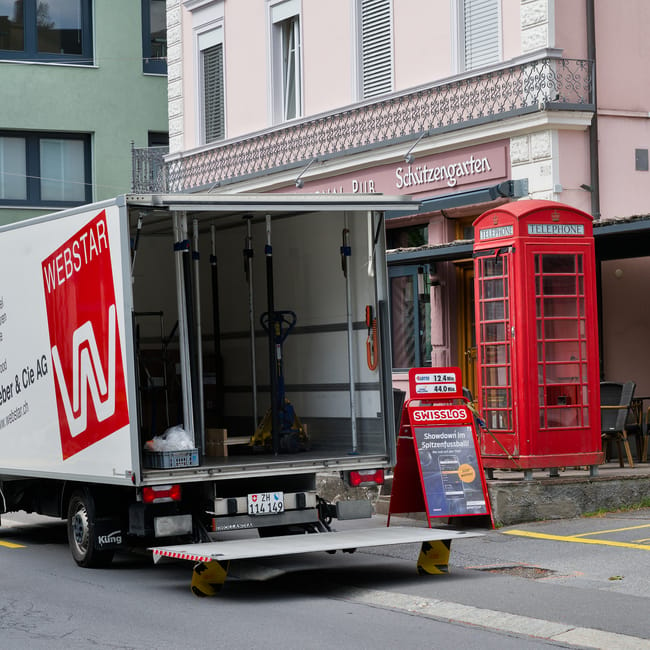
For customers who want the moving phase handled with a vehicle and crew sized to the load, man with van support can fit neatly alongside storage. It is especially useful when the aim is to move selected belongings carefully rather than carry out a full relocation. That same practical thinking applies to larger loads, where a moving truck may be the better choice for grouped furniture, boxed stock or heavier commercial items.
Pricing factors and quotation details
Storage costs are usually shaped by the volume of items, the amount of handling involved, and whether collection or delivery is part of the arrangement. Bulky furniture takes up more room, delicate possessions may need extra packing, and awkward access can add time to the move in or out. A clear quote depends on understanding what is being stored, how it is prepared and whether any stairs, tight entries or parking limitations affect the work.
When requesting a quotation, it helps to describe the load honestly and consistently. A room-by-room list, photographs of the larger items and a note of any fragile or unusually heavy pieces can make planning easier. If there are dates to work around, mention those too, because staging affects what can happen first. The more precise the information, the easier it is to shape a practical storage arrangement that suits the load.
If the items are part of a broader home project, combining services can sometimes be simpler than arranging everything separately. packing and unpacking services can help when the main challenge is preparing belongings properly before they go away and then sorting them again on return. Ask for a quotation once you know the items, timing and access details so the arrangement reflects the real work involved.
About Hampstead

Hampstead is an area in north London known for its village-like high street, steep lanes and association with the open heath to the north and east of the centre. It developed from a medieval settlement into one of London’s best-known residential districts, and its built environment still reflects that long history through Georgian terraces, Victorian villas and later interwar and modern infill. The area’s character is shaped by contrasts: quiet residential streets sit close to busy routes, while the heath provides a large expanse of open landscape within the capital. Hampstead Heath itself is one of London’s most recognisable green spaces, with ponds, wooded slopes, grassland and long views from higher ground. Parliament Hill is especially notable for its panorama across central London, and the heath has long been valued for walking, sport and informal recreation. Close by, Keats House connects the area with literary history, while the locality’s museums, churches and galleries add to its cultural range. Hampstead’s conservation areas and tree-lined streets are a major part of its identity, and the district has also been associated with artists, writers and musicians over many decades. The mixture of preserved historic fabric and active local life gives it a distinct place within the wider borough. Even without leaving the area, one can move from compact commercial streets to open hillside, from elegant squares to older lanes, and from heavily built-up neighbourhoods to quieter passages with a strong sense of continuity.
House clearances and selective removal
Not every job is about storage alone. Sometimes the better answer is to separate what should be kept, what should be removed and what may need moving into storage for a short period while decisions are made. A careful clearance process helps avoid unnecessary waste and makes it easier to protect furniture or keepsakes that still have a use. It is particularly useful when a property is being emptied in stages rather than all at once.
Selective removal works well when some items are destined for reuse, some for onward transport and some for disposal. That kind of split job benefits from a methodical approach, because the same room may contain several categories of belongings. The right sequence helps prevent confusion and reduces repeat handling. commercial moves can also be relevant where an office is clearing surplus equipment and needs to keep some items in circulation while others are set aside safely.
Where larger items are involved, using the right transport option matters more than speed. Heavy cabinets, desks, shelving and boxed materials should be moved in a way that suits their size and weight. If you are unsure how much needs to be stored or removed, a concise list is usually a better starting point than an overcomplicated plan. It gives room for a practical quote and a workable sequence.
How we organise a storage move
A good storage move is built around clarity. First, identify the items that will be stored, then decide which need extra protection and which can travel with standard packing. After that, the loading order should reflect size and fragility rather than convenience alone. This keeps the process orderly and reduces the chance of items being buried under heavier pieces before they have reached the right place.
For many customers, the main concern is not simply where things will go, but how they will be found again. That is why we recommend keeping related items together and avoiding vague labels. A box marked only “miscellaneous†creates more work later, while a label that notes the room and contents remains useful even after time has passed. Organisation at the start pays off when storage ends.
If you need to arrange a next step after storage, the process should remain straightforward rather than fragmented. Some customers move directly into a new property, while others return items to an office or use a second vehicle for the final leg. In either case, removal truck hire can be a useful option when the load is substantial and the transfer needs the right vehicle for bulkier belongings.
Requesting a quotation and planning your next step
To receive a sensible quotation, it helps to give a clear picture of the storage load, the access at each end and the timing you need. If the items include mixed household furniture, office stock or fragile cartons, say so from the outset. That lets the arrangement reflect the true handling required rather than relying on assumptions. The more accurate the description, the easier it is to plan a storage move that feels orderly.
There is no need to overcomplicate the enquiry. A short summary of what must be stored, where it is coming from and when it needs to move is often enough to begin. If you already know that some belongings will need packing support, transport only, or later return, include that too. Clear information leads to a clearer proposal, and it reduces the chance of revisiting the same details multiple times.
If you are ready to make progress, use the most suitable contact route and request a quotation today. We can help you think through the practical options for storage in Hampstead and turn your list of items into a workable plan.