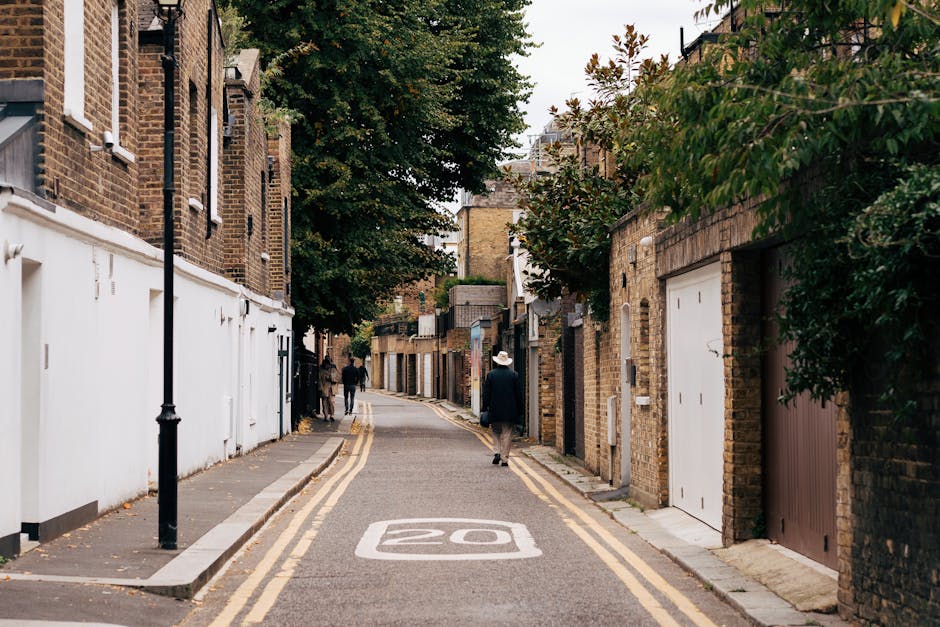
NW3 moves: navigating Hampstead's narrow streets
Moving in Hampstead sounds idyllic on paper. Tree-lined streets, period homes, a village feel, and all of that North London character. Then the van arrives, the road narrows, a car is parked awkwardly opposite a raised kerb, and you realise the move needs more than muscle. NW3 moves: navigating Hampstead's narrow streets is really about planning well, protecting your belongings, and making smart choices before the first box leaves the flat.
In practice, the best moves in Hampstead are rarely the ones that rely on brute force. They are the ones that respect tight access, awkward turns, permit constraints, neighbours, stairs, and the simple fact that some streets just do not forgive poor preparation. This guide breaks down how to handle it properly, whether you are moving a family home, a studio flat, or a small business premises nearby. A calm plan goes a long way. Truth be told, it saves a lot of swearing too.
Along the way, you will find practical steps, common mistakes, a comparison of moving methods, and a checklist you can actually use. If you are still deciding which service type fits your move, it also helps to understand the difference between home moving support, a man and van service, and a larger moving truck. The right choice depends on access as much as volume.
Table of Contents
- Why NW3 moves: navigating Hampstead's narrow streets Matters
- How NW3 moves: navigating Hampstead's narrow streets Works
- Key Benefits and Practical Advantages
- Who This Is For and When It Makes Sense
- Step-by-Step Guidance
- Expert Tips for Better Results
- Common Mistakes to Avoid
- Tools, Resources and Recommendations
- Law, Compliance, Standards, or Best Practice
- Options, Methods, or Comparison Table
- Case Study or Real-World Example
- Practical Checklist
- Conclusion
- Frequently Asked Questions
Why NW3 moves: navigating Hampstead's narrow streets Matters
Hampstead is not a straightforward part of London to move through. The area has a mix of mansion blocks, terraces, converted houses, mews-style access points, steep approaches, and roads that can feel much tighter than they look on a map. For movers, that changes everything. A route that looks fine for a regular car may be awkward for a van. A parking space that seems available at 8 a.m. may disappear by 8:10. And a front door that opens wide enough for a sofa can still be tricky if the hallway bends sharply halfway in.
This matters because narrow streets do not just slow a move down. They increase the chance of avoidable damage, strained furniture handling, neighbour complaints, parking problems, and time overruns. The vehicle may need to stop further away. The team may have to shuttle items by hand. Lifting angles become awkward. A large wardrobe suddenly becomes a problem, not because it is heavy, but because the route through the property is narrow and fussy. London property has a way of doing that.
It also matters commercially. If you are booking a service and the access information is vague, the quote may be based on the wrong assumptions. That can lead to surprises on moving day, and nobody likes surprises when they are surrounded by boxes and half-assembled lamps. A proper access assessment gives the moving team a better chance of using the right equipment, the right vehicle size, and the right timing.
For many customers, the biggest mistake is assuming Hampstead behaves like a generic residential area. It doesn't. NW3 rewards the people who plan for the street, not just the property.
How NW3 moves: navigating Hampstead's narrow streets Works
At a practical level, a narrow-street move works by reducing uncertainty before the moving day starts. The team tries to understand three things early: access, parking, and carrying distance. Once those are clear, it becomes easier to choose the right vehicle and route. If you are considering a smaller setup, a man with van arrangement can be useful for lighter loads or quicker collections, while a fuller household move may need more structured support.
The first step is usually a conversation about the property and street layout. Questions might include: Can a van stop outside the door? Is there a height restriction or low tree canopy? Is the road one-way? Are there loading restrictions? Is the move involving stairs, split levels, or a basement entrance? These details sound small, but in Hampstead they can be the difference between a smooth unload and a frustrating queue of items on the pavement.
Next comes vehicle selection. Not every move should use the biggest truck available. In a narrow NW3 street, a smaller vehicle can sometimes be faster because it can park closer, reverse more safely, and manoeuvre without blocking traffic. That said, if the job is large, sometimes a larger removal truck hire solution is still the right choice, especially if the team can plan the approach carefully and avoid multiple trips.
Then there is the packing and loading side. Tight access means items need to be packaged so they can be carried through narrow hallways, staircases, and doorframes without snagging. If the move includes delicate or awkward pieces, professional packing and unpacking services can reduce the stress a lot. To be fair, the difference shows up quickly when you are trying to turn a bulky sofa around a corner in a Victorian corridor that seems to shrink by the second.
Finally, the move itself is usually paced more carefully than a standard suburban relocation. You may see a staggered load plan, extra protection on furniture, and a more deliberate hand-carry process. In narrow streets, speed is useful, but control is better.
Key Benefits and Practical Advantages
Good planning around narrow Hampstead streets offers benefits that go beyond simply "getting the stuff out." You are reducing friction at every stage of the move. That can mean fewer damaged items, less time waiting for parking to clear, and a calmer experience for everyone involved. Small things matter here. A few extra minutes spent measuring access can save a whole afternoon later.
- Less risk of property damage: Doorframes, stair corners, and banisters are the usual victims in tight access moves.
- Better time control: When the route is planned, loading and unloading tend to happen with fewer delays.
- Smarter vehicle choice: A smaller van can be more effective than a large truck if street space is limited.
- Lower stress on moving day: Clearer expectations mean fewer last-minute arguments over parking or access.
- Improved neighbour relations: Less blocking, less noise, less faffing around on the pavement.
There is also a business benefit for local commercial clients. Small offices, clinics, and studios in NW3 often need moves outside the usual 9-to-5 flow, especially where shared access or tight loading points exist. If you are relocating a workplace, office relocation services can help coordinate a more controlled process, while commercial moves are usually best planned with access and business continuity in mind.
One more practical upside: better planning can save you from over-ordering the wrong type of transport. That matters because the most expensive solution is not always the largest one. It is often the one that does not fit the street.
Who This Is For and When It Makes Sense
This kind of move is relevant to a surprisingly wide group of people. If your property is in or around Hampstead, Gospel Oak edges, or other NW3 pockets with narrow residential streets, you are probably already feeling the pinch of access before the move begins. It is especially relevant if your building has no lift, your front door opens onto a tight pavement, or your street has regular parking pressure. In those situations, even a "small" move can become a logistical puzzle.
It makes sense for:
- families moving in or out of period homes with narrow staircases
- flat sharers moving from upper floors
- older residents downsizing and needing careful handling of furniture
- small business owners moving stock or equipment through restricted access
- landlords and letting agents arranging tenant turnovers
- people who need furniture collected or delivered in tight streets, where a furniture pick-up service can be the sensible option
It also makes sense if you value predictability more than guesswork. Some customers could probably manage with a hire van and a few friends. But in Hampstead, the hidden friction often shows up late in the day, once fatigue has already set in. A professional approach usually works better because it anticipates the awkward bits before they turn into real problems.
And yes, sometimes the move is not huge. Sometimes it is just a sofa, a couple of heavy bookcases, and a narrow street that refuses to co-operate. That still counts.
Step-by-Step Guidance
Below is a practical sequence you can follow for a smoother NW3 move. It is not fancy, but it works. In moving, simple systems tend to beat heroic improvisation every time.
- Map the access route. Look at the street, not just the postcode. Check for width constraints, bends, parked cars, low branches, traffic flow, and whether the vehicle can stop near the entrance.
- Measure the awkward bits. Measure key furniture, doorways, stair turns, and any hallway pinch points. A tape measure costs nothing compared with a failed sofa turn.
- Choose the right vehicle size. Smaller can be better where parking is tight, but oversized loads may still need a larger truck. Match the van to the street, not the other way around.
- Sort parking and loading expectations early. If you are using loading bays or timed access, build that into the move plan. Do not assume the space will magically be free.
- Protect furniture properly. Use blankets, covers, stretch wrap, and corner protection where needed. In narrow access properties, bump damage usually happens on corners and doorframes.
- Stage items by room. Keep boxes and dismantled furniture grouped logically so the team can load faster and avoid confusion on the pavement or in the hallway.
- Use a sensible load order. Put the most awkward, fragile, or heavy pieces in first if the route is difficult, then build around them carefully.
- Plan for a final walk-through. Before the vehicle leaves, check cupboards, loft spaces, meter cupboards, and those annoying little places where one last charger always gets left behind.
If you want a more hands-on service, house removalists can be a good fit for full-property moves where access is tight and furniture handling needs extra care. For smaller, more flexible jobs, a man-and-van setup may still be enough. It depends, really, on the scale and the street.
Expert Tips for Better Results
Here are the kinds of things that experienced movers tend to pay attention to, especially in Hampstead. Some are obvious once you hear them. A few are the sort of detail people only learn after one bruising move, literally.
- Schedule with the street in mind. Early morning starts can help if parking is easier and local traffic is lighter. That said, check local conditions rather than assuming.
- Keep one person on access watch. Someone should be watching for passing cars, cyclists, or pedestrians while items are brought out.
- Break down large furniture where possible. Removing legs, shelves, or detachable panels can make a huge difference in a narrow hallway.
- Use colour labels. Quick room labels help when everything is being carried through a compact property and placed into different floors.
- Leave space for a turning point. A large wardrobe needs room to pivot, not just room to move forward. That is where the headache usually starts.
- Confirm access twice, not once. What the client remembers and what the street allows are sometimes two different stories.
One small but useful habit is to take photos of the entrance, parking position, and staircase before the move. Those images make planning easier and help everyone visualise the challenge. It sounds basic. It is basic. And it helps a lot.
Another tip: if the move includes a lot of packing, start with the least-used rooms first. It keeps the final few hours calmer, which is honestly where many moves either come together or unravel a bit.
Common Mistakes to Avoid
Most problems in narrow-street moves are preventable. The issue is not usually bad luck; it is usually a missed detail. The list below covers the big ones.
- Booking the wrong size vehicle. A van that is too large can turn a quick stop into a traffic problem.
- Ignoring parking restrictions. Even short stops can become difficult if the street is heavily controlled or crowded.
- Not measuring furniture properly. A sofa is only "fine" until it reaches the stair landing.
- Forgetting about upper-floor access. Narrow staircases and railings can add more complexity than the front door itself.
- Overpacking boxes. Heavy, overfilled boxes are harder to carry, more likely to split, and more likely to slow the whole move.
- Assuming there will be room to reverse. Some Hampstead streets simply do not allow easy reversing. Assuming otherwise is asking for trouble.
- Leaving delicate items loose. Small items can be crushed in a rush. Wrap them properly and label them clearly.
One common mistake deserves special mention: underestimating the carrying distance. A move can look manageable on paper, then become exhausting when the van has to park further away and every item needs a hand-carry along the pavement. That extra distance changes the whole pace. It really does.
If you are doing the move yourself, that is the moment people start saying, "It's only a few extra metres," right before their arms disagree. Fair enough, but it matters.
Tools, Resources and Recommendations
You do not need a huge toolkit to move well in NW3, but a few simple items make a proper difference. The practical aim is to reduce friction and protect both the property and the furniture.
- Tape measure: For checking door widths, stair turns, and bulky items.
- Furniture blankets and wraps: Useful for protecting edges during tight turns.
- Strong labels and marker pens: Keep box contents and destination rooms clear.
- Gloves with grip: Helpful for lifting awkward items and reducing slips.
- Dollies or sack trucks: Good for heavier boxes where the route allows safe wheeling.
- Zip bags and cable ties: Handy for screws, shelves, and dismantled furniture parts.
For many readers, the most useful "resource" is a service that fits the property rather than forcing the property to fit the service. If you want a more tailored option for domestic relocations, home moves support is often a better starting point than a generic transport-only solution. If you only need a smaller load moved, a flexible van-based service may be enough. If you need help with setup and care, then the packing side matters more than people expect.
You can also check the company's about us page if you want a better feel for the team behind the service, or go straight to the contact page when you are ready to discuss access and timings. A quick conversation can prevent a lot of back-and-forth later.
Law, Compliance, Standards, or Best Practice
Most residential moves in Hampstead do not involve complex legal issues, but there are still practical standards to respect. Parking and loading must be handled in line with local rules, road markings, and any restrictions that apply to the street. You should also take care not to obstruct pavements, driveways, or emergency access. That sounds obvious, yet on a busy move day it is exactly the sort of thing that gets missed if nobody is paying attention.
For businesses, there may be additional expectations around access times, building management rules, shared entrances, or insurance requirements. Office relocations often need a bit more paper trail and a bit less guesswork. That is where professional planning matters, because commercial buildings can be surprisingly particular about lift bookings, security access, and loading windows.
Safe handling is another important standard. Proper lifting technique, stable stacking, and secure load distribution are all part of good practice. They are not just nice-to-haves. They reduce the risk of injury and damage. If a moving team is working in a narrow street, caution is not a sign of inefficiency; it is competence.
It is also wise to check service terms before booking. This is especially true if you are comparing quotes, because the scope of service can vary. For the fine print, review the terms and conditions and, if you want reassurance on how personal information is handled, the privacy policy. Not the most thrilling reading, granted, but useful all the same.
Options, Methods, or Comparison Table
Different move types suit different Hampstead properties. The right choice depends on access, load size, urgency, and how much help you want on the day. Here is a simple comparison to make the decision clearer.
| Option | Best for | Strengths | Watch-outs |
|---|---|---|---|
| Man and van | Smaller moves, quick collections, a few rooms, tight access | Flexible, often easier to park, good for narrow streets | May need multiple trips for larger loads |
| House removalists | Full house moves, heavier furniture, stair-heavy properties | More hands, more structure, better for complex handling | Needs more planning around parking and timing |
| Moving truck | Larger loads and fuller relocations | Can move more in one go | Harder to position in very narrow streets |
| Removal truck hire | Moves where the customer wants a dedicated vehicle solution | Useful for organised, higher-volume jobs | Requires clear loading access and route planning |
For a lot of NW3 customers, the decision comes down to this: do you want the most capacity, or the easiest access? Those are not always the same thing. In narrow Hampstead streets, access often wins. Capacity only matters once the vehicle can actually get close enough.
Case Study or Real-World Example
Imagine a two-bedroom flat near a narrow residential road in Hampstead. The property is on an upper floor, the staircase has a tight turn halfway up, and the street has limited stopping space. The residents are moving a sofa, two beds, a dining table, several bookcases, and a small number of fragile boxes. On paper, it sounds manageable. In real life, it needs a proper plan.
The moving team would usually start by checking whether a medium van can stop safely near the entrance. If not, they might position slightly further away and plan a carry route that avoids blocking neighbours. The sofa is measured before moving day, and the legs are removed to reduce turning issues. Boxes are labelled by room, while the most fragile items are packed separately so they are not shoved in last-minute. That small bit of order changes the whole atmosphere.
On the day itself, one person manages access while the others focus on lift and carry technique. The team takes the sofa first because it is the hardest item to handle. Once that is out, the rest of the move becomes more straightforward. No drama, no near-misses, no trying to wedge a wardrobe past a banister with crossed fingers.
That kind of approach is especially useful in Hampstead because the street itself becomes part of the moving problem. If you ignore the street, the street will remind you.
Practical Checklist
Use this checklist in the week before your move. It is simple, but it catches a surprising number of issues.
- Confirm the full address and post code, including flat number and entrance details
- Check whether the street is narrow, one-way, or hard to reverse in
- Measure large furniture and compare it with doorways and stair turns
- Decide whether a smaller van or a larger truck is more realistic
- Ask about parking, loading, and any building access restrictions
- Label boxes by room and note fragile items clearly
- Dismantle beds, tables, or shelves if that will help with the route
- Protect floors, corners, and delicate furniture surfaces
- Keep essentials separate: keys, phone charger, documents, medication, kettle bits, and all the little things you always need first
- Walk the route one last time before the vehicle arrives
Expert summary: the best NW3 moves are not rushed, not oversized, and not based on assumptions. They are built around access, timing, and sensible vehicle choice. That is the whole game, really.
Get a free quote today and see how much you can save.
Conclusion
Moving through Hampstead's narrow streets does not have to be stressful, but it does demand respect for the local layout. Once you understand how access, parking, vehicle size, and furniture handling interact, the move becomes much easier to manage. That is true whether you are relocating a whole house, shifting a few key items, or organising a business move with limited time and tighter logistics.
If you take one thing from this guide, let it be this: plan for the street, not just the address. Measure early, choose the right transport, and keep the route as clear as possible. A move that looks complicated at first can become surprisingly straightforward when the details are handled properly.
If you are comparing support options, it is worth looking at the services most relevant to your situation, from house removalists to man and van help, or even a dedicated solution for moving truck needs. The right fit will make NW3 feel far less daunting. And once the last box is in place, the street suddenly seems a lot friendlier.
Sometimes that is how a good move feels in Hampstead: a little careful, a little busy, and then, finally, quiet. A proper exhale.
Frequently Asked Questions
What makes Hampstead moves more difficult than other London areas?
Hampstead has a mix of narrow residential streets, awkward parking conditions, older properties, and tight internal access in many homes. That combination makes planning more important than in areas with wider roads and easier loading space.
Is a man and van service enough for a move in NW3?
Sometimes, yes. If the move is small, the access is tight, or you only need a few items moved, a man and van service can be a very practical choice. For larger homes or heavy furniture, you may need more hands and a larger vehicle.
Should I choose a bigger vehicle to save time?
Not always. In narrow streets, a larger vehicle can actually slow things down if it cannot park close to the property. The best vehicle is the one that fits the street and the load together.
How far in advance should I plan a Hampstead move?
As early as you can, especially if your building has restrictions, the street is tightly parked, or you need a specific time slot. Even a small move benefits from a proper access check in advance.
What should I measure before moving day?
Measure bulky furniture, door widths, hallway turns, stair landings, and any tight entrances. These measurements help you decide whether furniture needs to be dismantled or carried a different way.
Can I move during busy traffic hours in NW3?
You can, but it is usually harder. Quieter times are often easier for loading and unloading, though local traffic patterns and parking conditions should always be checked first.
Do I need packing help for a narrow-street move?
If you have fragile items, awkward furniture, or limited time, packing help can make a big difference. Properly packed items are easier to carry safely through tight hallways and stairs.
How do I avoid damaging walls and doorframes?
Use protective wraps, move slowly through corners, dismantle large furniture where possible, and make sure someone is guiding tricky items through the property. Most damage happens during turns, not straight carries.
What if my street has limited parking?
Then parking becomes part of the move plan, not an afterthought. You may need a smaller vehicle, an earlier start, or a loading strategy that keeps carrying distance manageable.
Are commercial moves in Hampstead handled differently?
Usually, yes. Commercial moves often involve stricter timings, shared access, building rules, and business continuity concerns. They need a more structured approach than a simple home relocation.
Can furniture pick-up work in a narrow NW3 street?
Yes, often it can. The key is confirming the item size, access point, and stopping space before the collection. A furniture pick-up service is especially useful when you only need specific pieces removed or delivered.
Where can I ask questions before booking?
You can start by reviewing the service pages and then reaching out through the contact page. A short conversation about access, timings, and load size usually clears up most concerns quickly.